Summer on the Treasure Coast is spectacular. Between backyard pool gatherings in Vero Beach, boat trips along the Indian River Lagoon in Sebastian, and sunny mornings on our dog-friendly beaches, outdoor adventures are a core part of the Florida lifestyle. Naturally, we want our puppies to accompany us on every single journey! Proper foundation training is essential to ensure they are well-prepared for these adventures.
However, as temperatures rise, water safety must become your top priority. A common mistake many owners make is assuming that all dogs are natural-born swimmers from day one. In reality, swimming is a learned skill, and introducing your puppy to the water incorrectly can lead to lifelong fear or dangerous accidents.
As premier Vero Beach puppy training specialists, the team at Goldstar Puppy Academy has put together our top four water safety protocols—straight from our training deck—to ensure your puppy builds bulletproof confidence around water this summer.
Why Puppy Water Training Starts With Small Steps
1. Build Water Confidence Slowly (Don't Force It!)
The absolute biggest mistake we see owners make is forcing a puppy into a body of water too fast. Dragging a hesitant pup into a pool or pulling them straight into crashing ocean waves can easily trigger a panic response, creating a traumatic experience that takes months of training to reverse.
The Golden Rule: Prioritize low-stress, gradual exposure.
Watch the Signs: If your puppy immediately panics, it means you went too fast. Take a step back, slow down, and focus on making the water a fun, rewarding place to be.
2. Conquer the Pool: Master the "Big Step Down" & Find the Stairs
When introducing your backyard pool, the shallow steps are your best friend. However, the transition from the shallow top step to the deeper water—the "big step down"—is always the hardest part for a young dog.
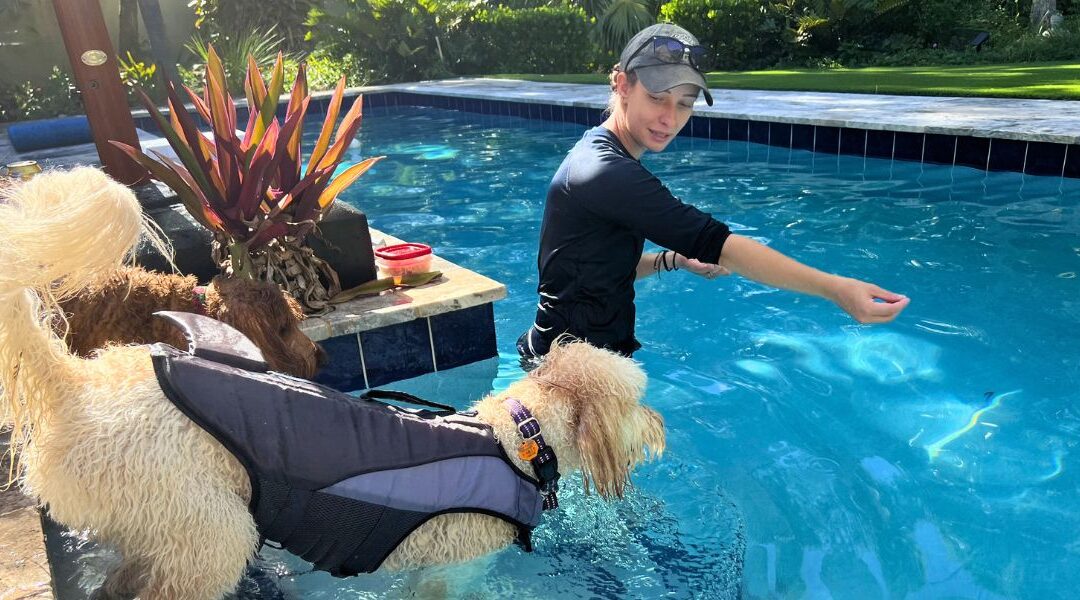
The Life Jacket Assist: Put a properly fitted life jacket on your puppy before they even get near the pool edge. When they are ready to try the big step down, use the built-in rescue handle to gently support their weight and guide them safely into the water.
Lure with High-Value Rewards: Keep the experience positive by continuously offering high-value treats or floating their favorite toys right in front of them to encourage voluntary movement.
Always Teach an Exit Strategy: From day one, always teach your puppy exactly how to find the stairs to get out. Dogs can drown simply because they panic and don't realize where the exit is. Guide them to the steps repeatedly so they know exactly how to climb out on their own.
3. The Backyard Setup: Start with a Kiddie Pool
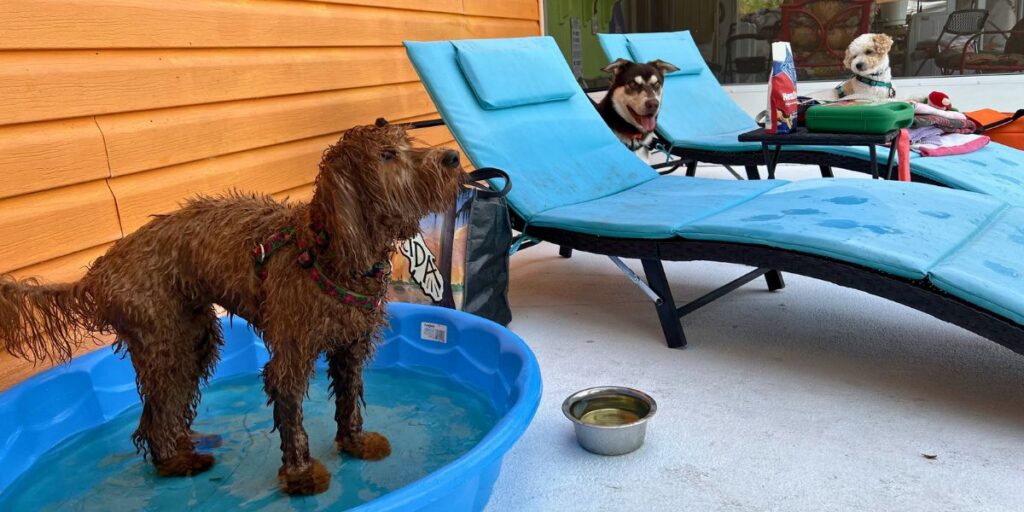
You don't need to dive straight into a full-sized swimming pool to start your training. A fantastic, low-stress alternative is using a plastic kiddie pool right in your backyard:
Start by placing just a tiny splash of water at the very bottom of the kiddie pool.
Practice having your puppy step in and out voluntarily, rewarding them with treats every single time their paws touch the water.
As their confidence grows over a few days, gradually fill the pool with more water. This builds a positive association with water underfoot without the intimidation of a deep end.
4. Transitioning to the Beach: Avoid Heavy Surf
When you are ready to graduate from the backyard to the beautiful Treasure Coast shorelines, remember that crashing waves can be incredibly intimidating to a puppy.
Let your puppy explore the wet sand and the shallow shoreline ripples at their own pace. Always use treats as positive reinforcement, and never force or drag them toward the breaking surf.
Don't start your beach journey at a high-surf destination.
Instead, seek out dog-friendly spots where you can find low, gentle waves and clear water.
Let’s Build Your Ultimate Adventure Buddy
Raising a pup who can safely and confidently share in your coastal lifestyle takes patience, consistency, and a little bit of teamwork. At Goldstar Puppy Academy, we focus on educating both ends of the leash, giving you simple, practical steps that fit naturally into your busy day.
Whether your puppy needs a boost in water confidence, better focus around distractions, or a reliable recall when it matters most, we are here to help. Our customized Day School and intensive Sleepaway Camp Board & Train programs in Fort Pierce, Sebastian, and Vero Beach are designed to help your dog truly blossom.
We would love to welcome your dog into the Goldstar family and help you get the most out of your Florida summers together!
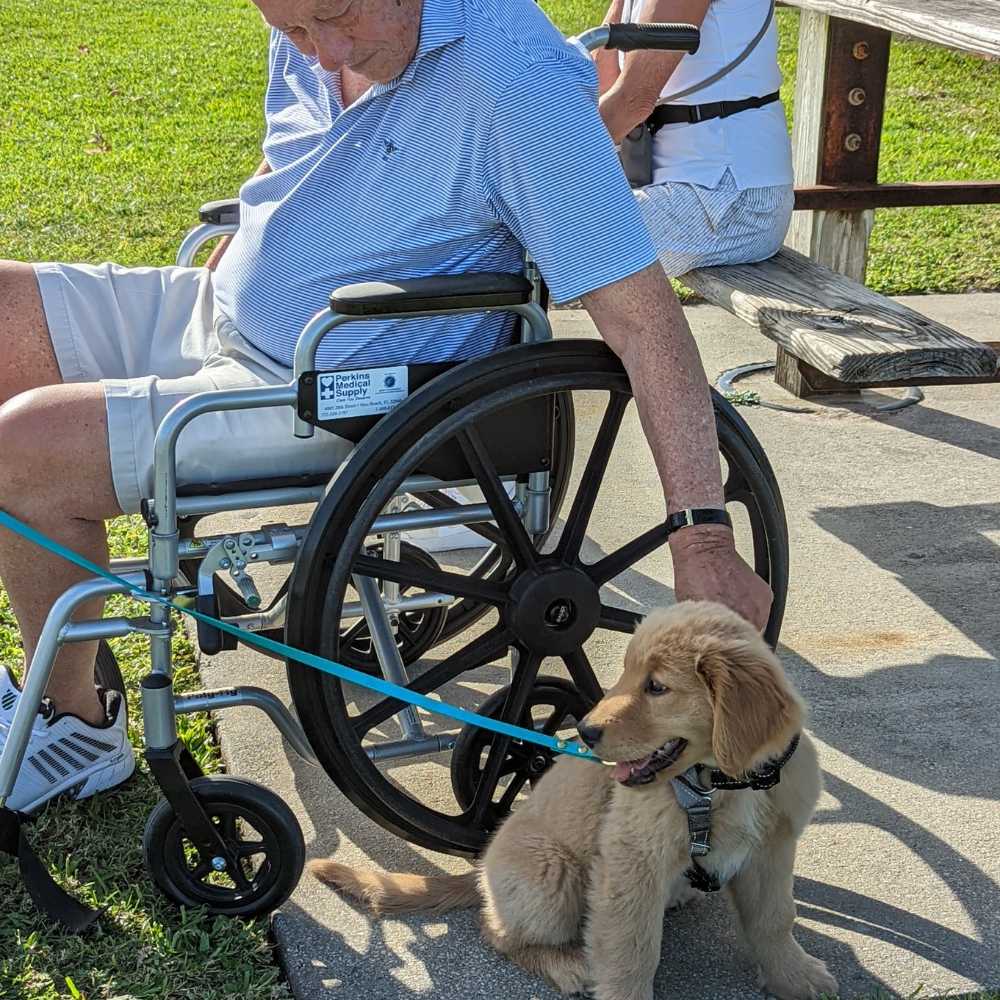
When it comes to the differences between service dogs and emotional support dogs, understanding their unique roles and functions is crucial. Service dogs are highly trained to perform specific tasks that assist individuals with disabilities, while emotional support dogs provide companionship and emotional comfort. In this article, we'll explore the key differences between service dogs and emotional support dogs, including their training, access rights, and the important role they play in the lives of those who rely on them.
What is a Service Dog?
Service dogs are highly trained to perform specific tasks that assist individuals with disabilities. These tasks are crucial for the daily functioning and independence of their handlers.
Examples of tasks performed by service dogs:
Alerting to oncoming medical episodes or seizures
Guiding individuals with limited or no vision
Assisting with mobility and balance
Interrupting anxiety or PTSD episodes
What is an Emotional Support Dog?
Emotional support dogs provide companionship and emotional comfort to individuals experiencing mental health challenges or stress. Unlike service dogs, emotional support animals (ESAs) are not trained to perform specific tasks related to a disability.
Training: Emotional support dogs are not required to undergo specialized working training.
Public Access: They do not hold the same public access rights as service dogs under federal law.
Service Dog Registration: Clearing Up the Misconceptions
There is actually no official "registration" or certification requirement for service dogs under the Americans with Disabilities Act (ADA). Many commercial websites claim you can "register your dog" online, but these certificates and vests carry no legal weight and are not recognized by the federal government.
No Official Registry: The ADA does not recognize any official service dog database or registry.
Avoid Misleading Websites: Buying a vest or ID card online does not legally qualify a pet as a service dog.
Public Access Rights: Where Can They Go?
Where Service Dogs Can Go
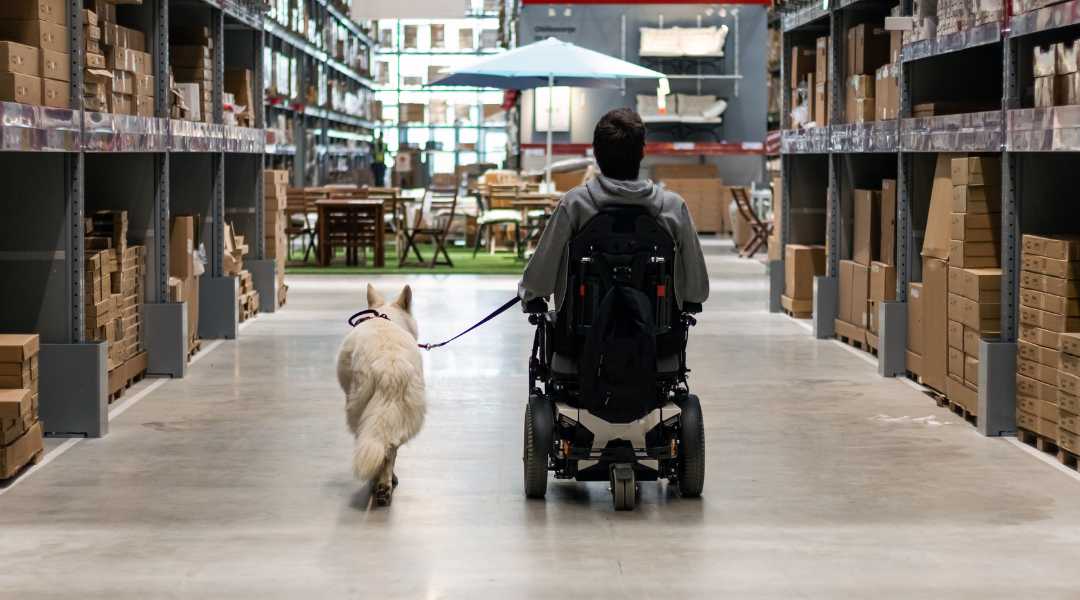
Under the ADA, service dogs can accompany their handlers almost anywhere the public is allowed, including restaurants, grocery stores, hotels, hospitals, and schools.
When entering a business, staff are legally allowed to ask only two questions:
Is the dog a service animal required because of a disability?
What work or task has the dog been trained to perform?
Where Emotional Support Dogs Can Go
Emotional support dogs do not share these public access rights. Businesses, restaurants, and public venues are not required to allow emotional support animals inside.
Note: Misrepresenting an untrained pet as a service dog harms individuals with real disabilities by creating skepticism, safety risks, and stricter venue enforcement for legitimate service teams.
The Importance of Respecting Working Service Dogs
Service dogs are working professionals—not pets. Disrupting a service dog by petting them, calling out, or offering food can distract them from life-saving tasks and put their handler in immediate danger. Always give working teams space and never interact with a service dog without explicit permission from the handler.
Reputable Service Dog Organizations
If you or someone you know is looking to learn more or support accredited service dog training, here are several highly respected organizations:
Canine Companions – Provides highly trained service dogs to adults, children, and veterans with disabilities at no cost.
The Seeing Eye – The oldest existing guide dog school in the world, empowering individuals who are blind or visually impaired.
Paws With A Cause – Custom trains assistance dogs for people with physical disabilities, seizure disorders, and autism.
NEADS World Class Service Dogs – Matches service dogs with veterans, children with autism, and individuals with physical disabilities.
K9s For Warriors – Provides rescue-turned-service dogs to veterans suffering from PTSD and military trauma.
Disclaimer: Goldstar Puppy Academy does not receive compensation or incentives for promoting these organizations. Links are provided purely for educational purposes to help connect our community with reputable resources.
Ready to Build Rock-Solid Manners for Your Dog?
While Goldstar Puppy Academy specializes in pet obedience and puppy development rather than specialized medical service training, we help everyday dogs build exceptional public manners and confidence!
Look at this face. Adorable, right? She’s the heart of our home, a star here at Goldstar Puppy Academy, and… a literal walking snowstorm. If you're searching for the best dog shedding hacks, you've come to the right place. Most people think having a double-coated dog means resigning yourself to a life of fur-covered furniture, but as a professional trainer and a dedicated Husky mom, I've learned that it doesn't have to be that way.
If you’re like me, you live in a constant state of "Husky Snow." I’m a trainer, but I’m also a dog mom who was tired of brushing for hours only to see a fresh tumbleweed roll past five minutes later. These dog shedding hacks are the exact strategies I use to keep my sanity (and my vacuum) intact
1. Dog Shedding Hacks: The High-Velocity Power Move
Most owners rely solely on an undercoat rake or a standard slicker brush. While those tools are valuable for daily maintenance, you could brush for an hour and still not be done when a dog is "blowing coat." Instead, one of my absolute favorite dog shedding hacks is investing in a high-velocity blow dryer.
Unlike a human hair dryer, these machines use high-pressure air to literally blast the loose undercoat away from the skin. For a Husky or Shepherd mix, it is the single best investment you will ever make for your home. You save your back from leaning over the dog for hours, and you save your vacuum from constant clogs. Always take your dog outside for this! The goal isn’t just to dry them; it’s to use the air pressure to remove dead fur. This powerful air pressure removes way more loose undercoat than a manual brush ever could.
2. The "Dry Shampoo" Dog Shedding Hack
A professional groomer shared this trick with me, and it changed my entire bathing routine. Most people hose their dog down until they are soaking wet before applying shampoo. However, for the most effective dog shedding hacks, there’s a much better way to strip out that dead hair.
By applying diluted shampoo to a dry coat, the soap latches onto the loose clumps of dead undercoat more effectively. It creates a "grip" on the dead fur that water alone can't achieve. When you finally rinse, you’ll see massive amounts of hair go straight down the drain instead of sticking to your furniture later. It makes the blowout process 10x faster because the hair is already loosened and ready to fall out.
3. Conditioning and Grooming Gloves
Don't stop at the shampoo! To maximize your results, you need to address the coat while it's being conditioned. While the conditioner is sitting on the fur, use your hands or a grooming glove with rubber bristles to massage the coat in circular motions. This deep-cleans the skin and pulls out the remaining dead hair that the blower might have missed. It also helps distribute the natural oils in their coat, which can reduce future breakage and excessive shedding over time.
4. The Flooring "Camouflage" Dog Shedding Hack
If you’re moving or renovating, consider your dog’s coat color when choosing your tile—it is the ultimate passive dog shedding hack. My Husky, Kaya, sheds white and light gray, which blends perfectly with our white tile. However, my chocolate-covered Husky/Shepherd mix has dark hair that shows up everywhere! Matching your flooring to your dog's primary coat color is a lifesaver for your visual stress.
Why "Husky Snow" Requires a Professional Strategy
As a dog trainer and a Husky mom, I know that shedding isn't just about cleaning—it's about the dog's comfort. When dead hair gets trapped in the undercoat, it can cause hotspots and skin irritation. Using these dog shedding hacks ensures your dog's skin can breathe and their coat stays shiny and healthy. This is why we focus so much on the "blowout" and "conditioning" phases here at Goldstar Puppy Academy.
Tackling shedding requires a bit of effort, but with these pro tips, you can spend less time cleaning and more time enjoying your pup. Remember, consistency is key! Whether you’re using the "blow out" method or the dry-shampoo trick, finding a routine that works for your specific breed will save your vacuum and your sanity.
Want more training and lifestyle tips?
Follow us on social media for more professional advice, or let’s be honest—just to see a bunch of adorable pups!
Spring is in full bloom, and if you are looking for the 10 Best Dog-Friendly Patios on the Treasure Coast, you have come to the right place! There is nothing quite like grabbing a burger or a cold drink with your best friend right by your side. Thankfully, Vero Beach, Sebastian, and Fort Pierce are packed with amazing dog-friendly restaurant options for you to enjoy.
But before you grab the leash and head out for brunch, it is important to remember that bringing your dog to a restaurant is a privilege, not a right. A chaotic dog can ruin the meal for you, the waitstaff, and the other diners.
Here is our ultimate guide to our favorite local dog-friendly patios, plus the 3 Rules for Patio Etiquette every dog needs to know before they go.
The 10 Best Dog-Friendly Patio Locations
We love supporting local businesses that welcome our four-legged students. Based on our latest training outings and community favorites, here are the spots you need to check out this spring:
Vero Beach
American Icon Brewery: Known for its huge, spacious patio and a fantastic relaxed vibe that’s perfect for larger breeds.
Waldo’s Restaurant: You simply can’t beat the ocean breeze and casual "Old Florida" atmosphere here.
Sailfish Brewing Company: A fantastic, laid-back outdoor space in the heart of downtown Fort Pierce.
Cobb’s Landing: Situated right on the water with great breezes to keep your dog cool.
Islamorada Fish Company: A beautiful setting with a dog-friendly area that feels like a vacation.
2nd Street Bistro: A downtown favorite with a great patio for people (and dog) watching.
Pro Tip: Always call ahead to confirm their pet policies haven't changed before you head out!
3 Rules for Patio Etiquette
It is easy to find a dog-friendly restaurant. The hard part is making sure your dog actually knows how to behave at one. At Goldstar Puppy Academy, we teach our students that patio dining requires a specific skill set.
If you want to be invited back, your dog needs to master these three rules:
1. The "Under the Table" Rule (Settle & Place)
Your dog should not be sitting in the aisle, tripping the waiters, or sticking their nose on the table. The gold standard for patio dining is a dog that knows the "Place" or "Down/Stay" command. They should quietly settle under the table or right by your feet for the duration of the meal.
2. The "Four on the Floor" Rule
Waiters carry heavy trays of hot food and drinks. The absolute last thing they need is a friendly (but overly excited) dog jumping up to say hello. Your dog must be able to ignore people walking by and keep all four paws on the ground.
3. The "Silent Partner" Rule
A restaurant patio is full of distractions: dropped french fries, seagulls, and other dogs. If your dog barks at every passing distraction or whines for your food, it creates a stressful environment for everyone. A polite patio dog knows that begging is strictly prohibited.
Is Your Dog Patio-Ready?
Does the idea of taking your dog to a restaurant sound like a relaxing afternoon... or a total nightmare?
If your dog struggles with jumping, barking, begging, or pulling on the leash, you don't have to leave them at home all season. Patio manners are a learned skill, and we can teach them! Don't wait until the middle of spring to fix these behaviors. Book Your Free Consult Today with Goldstar Puppy Academy, and let's get your dog patio-ready so you can enjoy the beautiful Florida weather together!
Looking for more local advice? Check out our guide on Safe Socialization for Dogs before you head out to the patio!
When comparing dog daycare vs day school in Vero Beach or Fort Pierce, you will find plenty of traditional options. However, most of them look the same: a big room, a lot of dogs, and a staff member trying to referee the chaos.
It looks like fun, right? It’s just like taking your kids to recess. Unfortunately, here is the problem. Recess is great for 20 minutes, but it is exhausting for 8 hours.
At Goldstar Puppy Academy, we don't believe in the traditional "warehouse style" daycare model. We believe your dog deserves more than just a place to burn energy—they deserve a place to learn.
That is why we launched our exclusive Doggy Day School. Here is why it is different (and safer) than anything else on the Treasure Coast.
1. The "Velvet Rope" Policy (Why We Are Invite-Only)
The #1 reason traditional daycares feel chaotic is that they mix dogs with completely different energy levels and training.
Our Day School is Invite-Only. You cannot just drop your dog off. To join the club, every single student must be a graduate of our Doggy Scholar or Valedictorian training programs.
Why does this matter? It means every dog in the room speaks the same language. They all know what "Place" means. Additionally, these pups understand "Leave It." Most importantly, everyone knows how to play politely.
Traditional Daycare: A mosh pit of different behaviors.
Goldstar Day School: A social club for educated dogs.
2. Dog Daycare vs Day School: Constant Chaos vs Structured Rest
Dogs are not designed to wrestle for 8 hours straight. In fact, in a standard daycare, dogs often come home "exhausted," but they are actually over-stimulated and flooded with cortisol (stress hormones). Consequently, this can actually make behavior problems worse at home. Instead, we send home a dog that is fulfilled, not just fried. Therefore, at Day School, we follow a rhythm:
Active Play: Structured socialization with best friends.
Enrichment: Brain games and puzzles.
Required Naps: Private downtime in a climate-controlled crate to reset their brains.
3. We Don't "Watch" Them; We Train Them
Most daycares are just "warehousing"—keeping your dog alive until you get off work. Conversely, our Day School is a Training Maintenance Program. Because of this, our trainers spend the day reinforcing the good habits you already paid for.
Does your dog jump on the staff? We fix it.
Does your dog bark at the gate? We work on it.
Bonus: We even take them on Field Trips to local parks in Vero Beach and Fort Pierce to practice their manners in the real world.
How to Get Your Pass
This isn't for everyone. It is for owners who want the absolute best for their dogs.
If you are already a Goldstar Client: Ask us about upgrading your package to include Day School passes!
If you are new to Goldstar: Your journey starts with training. We need to build the foundation first.
Step 1: Book your Free Consult.
Step 2: Enroll in our Doggy Scholar or Valedictorian program.
Step 3: Unlock lifetime access to the Day School and our VIP Boarding.
Ready to ditch the daycare chaos? Your dog’s education starts here.