Once the back-to-school rush settles down and the family’s new routine becomes normal, many puppy parents notice a different challenge: the house is suddenly quiet for longer periods.
Home alone puppy training works best when independence is built gradually, with a predictable routine and realistic expectations for your puppy’s age.
Children are at school, adults are at work, and a puppy who enjoyed constant summer companionship is now expected to rest calmly alone. That transition does not always go smoothly.
Unexpected potty accidents, daytime barking, doorway chewing, pacing, crate resistance, and frantic greetings can all be signs that your puppy is struggling with the new routine.
At Goldstar Puppy Academy, we help families throughout Vero Beach, Sebastian, Fort Pierce, Port St. Lucie, and surrounding Treasure Coast communities teach puppies how to feel safe, confident, and settled when family members are away.
If your puppy is having a hard time being home alone, these practical steps can help you rebuild independence before temporary stress develops into a lasting habit.
Why Is My Puppy Suddenly Struggling When Left Alone?
Puppies do not automatically understand that being alone is safe. During summer, your puppy may have become accustomed to hearing people throughout the house, following the children from room to room, joining family activities, and receiving frequent attention.
When that activity disappears, your puppy experiences a major change without understanding why it happened—or when everyone will return.
This is especially common when:
- The puppy spent most of the summer with family members.
- Alone time increased suddenly instead of gradually.
- Feeding, potty, or exercise times changed.
- Crate practice became inconsistent.
- The puppy has excess physical or mental energy.
- Departures and arrivals have become highly emotional.
- The puppy has never learned how to relax independently.
The goal is not simply to leave your puppy alone and hope they “get used to it.” The goal is to build independence in manageable steps your puppy can successfully handle.
Common Signs of Alone-Time Stress
Before changing your home alone puppy training routine, observe what your puppy does, when the behavior begins, and how long it lasts.
Potty-training regression
A puppy who was previously doing well may begin having accidents when left alone. Sometimes the puppy is being asked to wait longer than they can physically manage. In other cases, a disrupted routine or stress may contribute to the problem.
Daytime barking or whining
Barking can be caused by boredom, outside noises, frustration, attention-seeking, or distress. A camera can help you determine when the barking begins and what happens immediately beforehand.
Doorway, furniture, or household chewing
Chewing is normal puppy behavior, but the location and timing matter. Chewing near doors, windows, or exit points may happen when a puppy is focused on where the family disappeared. Management and training must work together.
Pacing and difficulty settling
A puppy who repeatedly circles, follows departure cues, pants, or moves from window to door may be having difficulty relaxing.
Frantic greetings
Jumping, barking, mouthing, spinning, and zooming when family members return may signal pent-up energy or overexcitement. Repeatedly rewarding frantic behavior with immediate attention can make it part of the reunion routine.
Your Seven-Step Home Alone Puppy Training Survival Plan
Use this home alone puppy training plan as a flexible framework, adjusting each step to your puppy’s age, temperament, and current comfort level.
1. Confirm that the schedule is realistic
Consider your puppy’s age, bladder control, feeding schedule, exercise needs, and experience with being alone. A young puppy cannot be expected to follow the same schedule as a mature dog. If the family will be away longer than your puppy can comfortably manage, arrange an appropriate midday potty and activity break.
2. Meet your puppy’s needs before leaving
A thoughtful morning routine can make alone time much easier. Provide an outdoor potty break, age-appropriate movement, a short scent or training game, breakfast through enrichment, and one final bathroom opportunity before a calm departure.
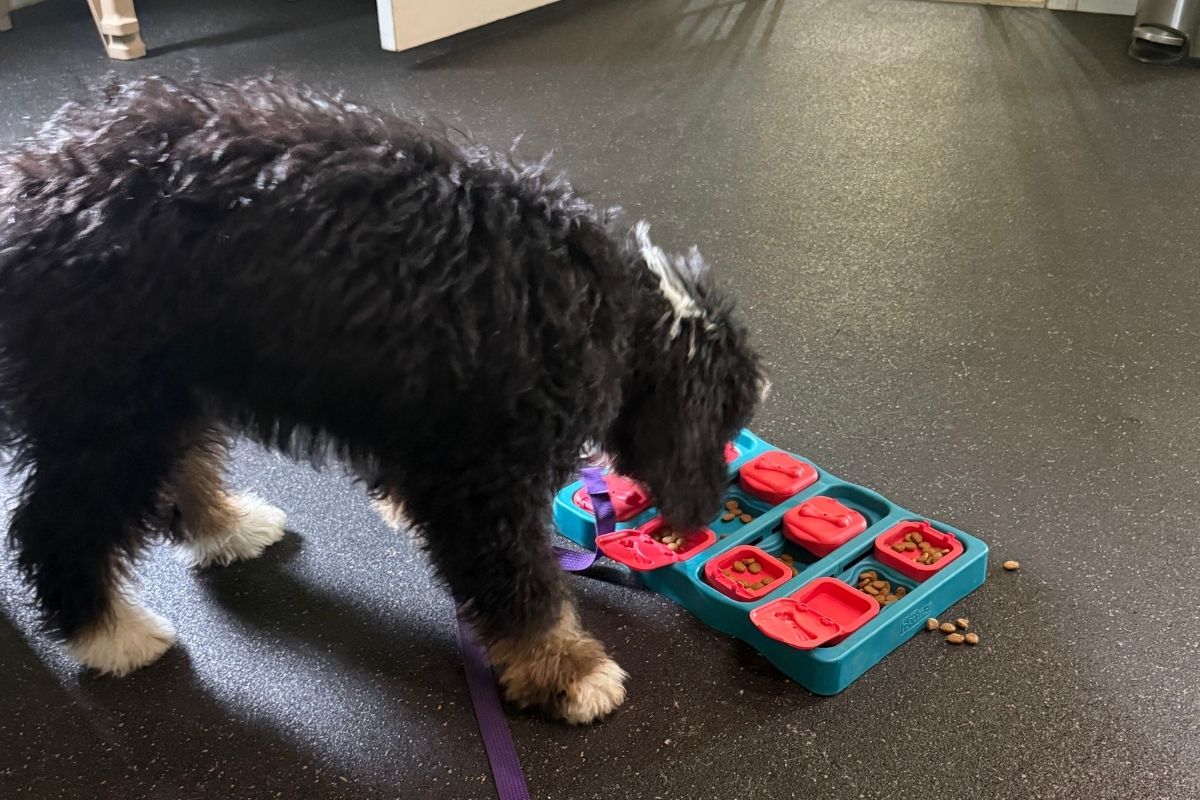
The objective is not to exhaust your puppy with frantic exercise. Combine movement, mental work, sniffing, and a few minutes of calm before leaving.
3. Create a safe, comfortable puppy zone
Your puppy should not have unrestricted access to the entire house before they are ready. Depending on the puppy, an appropriate setup might include a crate, exercise pen, gated puppy-proofed room, or another secure area.
Remove shoes, clothing, children’s toys, cords, food, cleaning products, and anything your puppy has previously chewed. Provide a comfortable resting area and a safe, puppy-appropriate enrichment option.
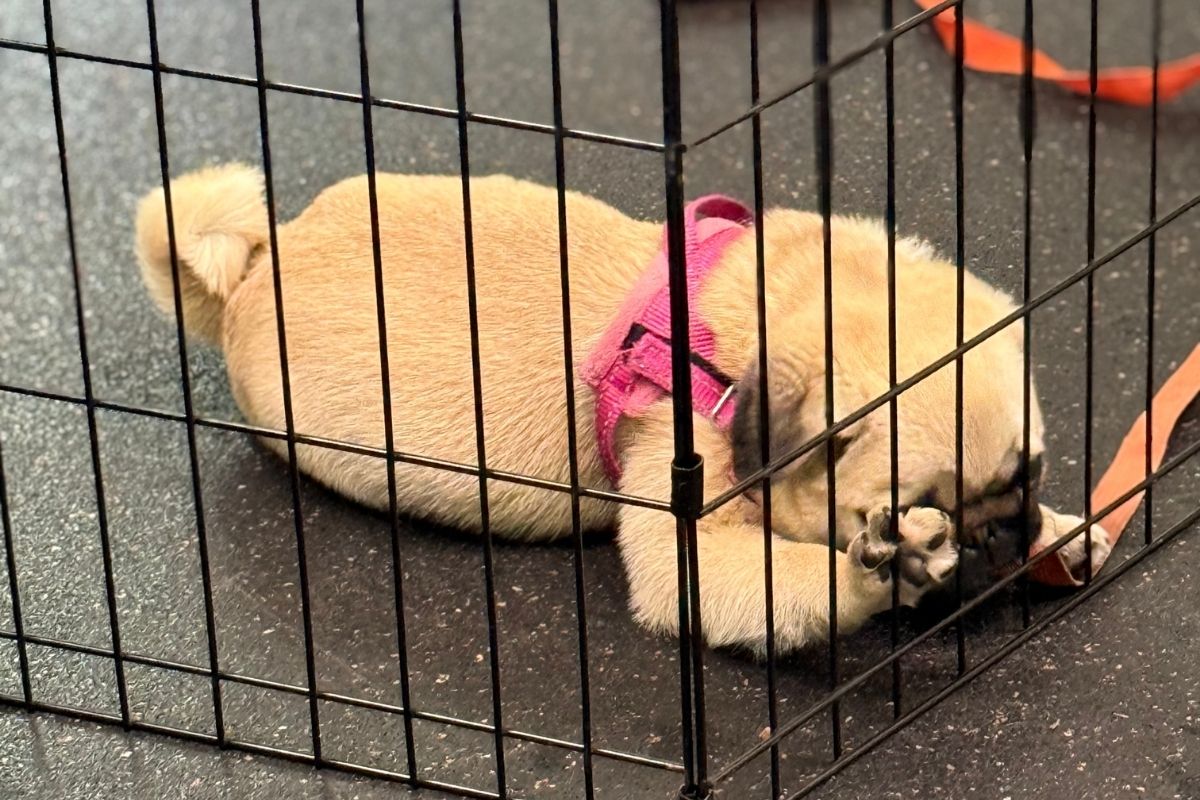
Crates can be valuable when introduced properly, but they should not be used to force a distressed puppy to remain confined longer than they can tolerate.
4. Practice independence while you are home
Short home alone puppy training sessions while you are nearby give your puppy repeated opportunities to succeed without becoming overwhelmed.
Encourage your puppy to rest behind a gate, in a playpen, on a place cot, or in the crate while you complete ordinary activities elsewhere in the home.
Start with short, successful sessions. Step into another room, close a door briefly, walk outside, or move the car, then return before your puppy becomes overwhelmed. Increase the duration gradually.
5. Make departure cues less important
Puppies quickly learn that keys, work shoes, bags, and backpacks predict someone leaving. Practice these actions when you are not going anywhere. Pick up your keys and sit down. Put on your shoes and make coffee. When it is time to leave, keep the goodbye calm and simple.
6. Use enrichment strategically
Food toys, snuffle mats, lick mats, and safe chews can create a positive association with quiet time. Choose enrichment based on your puppy’s age, size, chewing style, and experience, and supervise new items before leaving your puppy alone with them.
Remember that enrichment supports training; it does not replace it. A puppy experiencing significant distress may be too upset to eat or engage with a food toy.
7. Keep homecomings calm and structured
Enter calmly, put away your belongings, and take your puppy outside for a bathroom break. Offer attention when all four paws are on the floor. Then provide a structured outlet such as a sniffing walk, short obedience session, scent-search game, or place training.
What Not to Do When Your Puppy Struggles Alone
Effective home alone puppy training depends on preventing panic and helping your puppy practice calm behavior at a manageable pace.
Do not punish behavior you discover after returning
Your puppy cannot connect punishment with an accident or damaged object from earlier in the day. Clean the area, adjust management, and determine what allowed the behavior to occur.
Do not use a “cry it out” approach for severe distress
Brief protest and escalating panic are not the same thing. A puppy who attempts to escape, injures themselves, drools heavily, eliminates despite recently going outside, or remains distressed for an extended period needs a different plan.
Do not make sudden increases in alone time
Successfully resting alone for 15 minutes does not mean a puppy is ready for four hours. Build duration gradually and arrange support when the required absence exceeds your puppy’s current ability.
Do not assume more exercise will solve everything
Exercise is important, but an exhausted puppy has not necessarily learned how to feel safe alone. Independence, crate comfort, calmness, and settling are skills that must be practiced.
How Can You Tell Whether the Plan Is Working?
Look for gradual improvements rather than instant perfection:
- Settling more quickly after you leave
- Choosing to rest instead of pacing
- Engaging with enrichment
- Less barking or whining
- Fewer potty accidents
- Reduced chewing near doors and windows
- Calmer greetings when the family returns
- Greater comfort resting away from family members while everyone is home
A simple home camera can help you monitor progress. Keep brief notes about the duration, behavior, and anything that may have affected the day.
When to Get Professional Help
A customized home alone puppy training plan may be appropriate when gradual practice is not producing progress or your puppy shows signs of significant distress.
Contact a qualified professional if your puppy cannot settle, vocalizes for extended periods, repeatedly eliminates despite an appropriate schedule, attempts to escape, damages confinement areas, injures themselves, refuses high-value food, or shows intense pacing, panting, drooling, trembling, or panic.
For additional background on separation-related behavior, review the ASPCA’s guidance on separation anxiety.
Sudden behavioral changes can also have a medical cause. Consult your veterinarian if the behavior appears abruptly, is severe, or is accompanied by changes in appetite, thirst, digestion, urination, sleep, or general health.
Build Independence with Goldstar Puppy Academy
If your family needs support, home alone puppy training can be incorporated into a broader plan for everyday manners, settling, and confidence.
Learning to stay home alone is an important part of raising a confident family dog. Goldstar Puppy Academy offers customized help with crate resistance, potty-training setbacks, destructive behavior, overexcitement, leash manners, and difficulty settling.
Private puppy training
Personalized coaching can help your family create an appropriate routine, improve crate and place skills, and practice independence in manageable steps.
Day School
For dogs who are a suitable fit, Goldstar Day School provides structured activity, supervised socialization, enrichment, and opportunities to practice calm behavior. New families begin with a free phone consultation, followed by an assessment and trial day or trial days. Enrollment is selective so Goldstar can protect the safety and comfort of its existing alumni dogs.
Puppy Sleepaway Camp
For puppies who need a more immersive training foundation, Sleepaway Camp provides consistent practice with everyday manners, settling, confidence, and household routines.
Help Your Puppy Feel Safe When the House Gets Quiet
Consistent home alone puppy training can help your puppy learn that quiet time is safe and that family members always return.
Your puppy is not being difficult on purpose. They may simply need a clearer routine and more gradual practice with independence.
Goldstar Puppy Academy serves families throughout Vero Beach, Sebastian, Fort Pierce, Port St. Lucie, and surrounding Treasure Coast communities.
If potty setbacks, barking, chewing, crate struggles, or alone-time stress are disrupting your household, schedule a free phone consultation with Goldstar Puppy Academy or call or text 772-388-7073. We will help you identify the most appropriate next step for a calmer, more confident puppy.
Book Your Free Puppy Consultation Today »
For more help preparing your puppy for a changing family schedule, read our Back-to-School Puppy Reset guide.