Halloween puppy training can help prevent doorbell chaos, jumping, fear, and unsafe escapes. Use these seven practical steps to prepare your puppy for costumes, visitors, and Halloween night.
You do not need to wait until Halloween night to find out how your puppy will respond. Short practice sessions can teach calm greetings, build comfort around unusual sights and sounds, and give your dog a safe place to settle. Begin your Halloween puppy training with the easiest version of each activity and increase the difficulty only while your puppy remains comfortable.
Start With the Doorbell at a Low Level
For many dogs, the doorbell predicts instant excitement. Practice when no guest is actually waiting. Play a recorded doorbell sound very quietly or have a helper tap once. Immediately guide your puppy to a simple activity such as finding a few treats on the floor, going to a mat, or looking at you.
Repeat only a few times, then stop. If your puppy barks continuously, will not take food, or cannot respond to a familiar cue, the exercise is too difficult. Lower the volume, increase the distance from the door, or practice without the sound. The goal is to build a calmer response through repetition.
Teach a Place to Settle
A mat, bed, crate, or quiet room can give your puppy a predictable place away from the doorway. Practice this location during ordinary moments before adding visitors. Reward your puppy for stepping onto the mat, lying down, and remaining there briefly while you move around.
Gradually add realistic pieces of the routine: walk toward the door, touch the handle, open and close it, and speak to a pretend visitor. Keep each step easy enough for your puppy to succeed. A baby gate or closed interior door can add useful distance. Choose a setup that prevents access to the open exterior door without frightening or isolating your puppy.
Practice Calm Greetings With One Helper
Begin with one familiar adult instead of a group. Ask the helper to enter quietly and ignore the puppy for a moment. Reward four paws on the floor, a sit if your puppy already knows it, or calm attention near you. If jumping begins, the helper can pause and turn slightly away while you create more distance and help the puppy reset.
Keep the first greeting short. Several successful ten-second practices are more useful than one long visit that becomes increasingly exciting. Puppies learn from the pattern they repeat, so plan the distance, rewards, and exit before the helper arrives.
Introduce Costumes Without Pressure
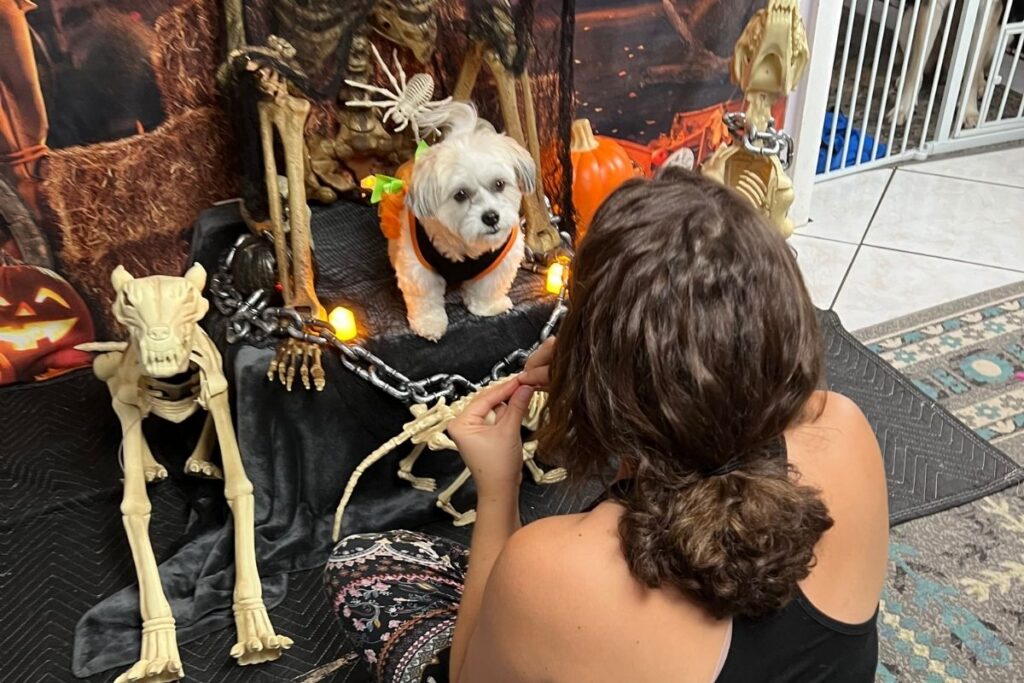
Costumes, hats, masks, and bulky decorations can make people look unfamiliar. During Halloween puppy training, place one costume item on the floor at a distance and let your puppy notice it. Pair calm observation with something your puppy enjoys. Later, a familiar person can hold or wear part of the costume briefly while standing sideways and allowing the puppy to choose whether to approach.
Do not corner your puppy, force an interaction, or repeatedly move a scary object toward them. Watch for avoidance, a tucked tail, trembling, frantic movement, repeated lip licking, or an inability to settle. Increase the distance and make the exercise easier when you see discomfort.
Prevent Door Dashing Before It Happens
Management matters while training is still developing. Use an interior gate, closed room, crate, or another secure barrier so the open front door is never your only line of protection. Make sure identification information is current and that everyone in the household understands the plan.
Practice waiting several feet from the door while it opens only a few inches. Reward your puppy for staying behind the boundary, then close the door and reset. Avoid testing the behavior with an unsecured exterior door. A rehearsed safety routine protects your puppy while the training becomes reliable.
Create a Comfortable Halloween Retreat
Some puppies will do best away from the activity. Set up a quiet space with water, comfortable bedding, and an appropriate enrichment item your puppy has used safely before. Reduce the sound of the doorway when possible. Check on your puppy regularly and provide normal bathroom breaks without taking them through a crowded entrance.
A retreat is not a punishment. It is a practical part of Halloween puppy training for a puppy who is tired, worried, or not ready for repeated greetings. You can continue practicing on quieter days without using Halloween night as the final exam.
Keep Holiday Hazards Out of Reach
Store candy, wrappers, glow products, electrical cords, and small decorations where pets cannot reach them. Review the ASPCA’s Halloween pet-safety advice for additional guidance. Chocolate and products containing xylitol can be dangerous to dogs. If you think your puppy swallowed something unsafe, contact your veterinarian or an animal poison-control service promptly rather than waiting for symptoms.
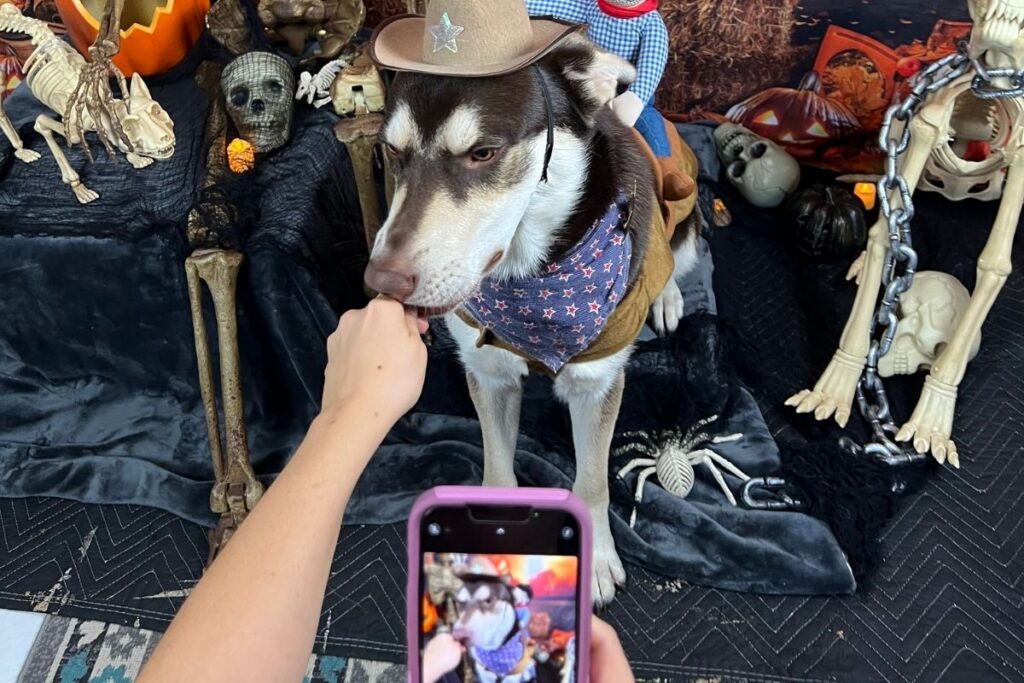
If your puppy wears a costume, make sure it allows normal movement, breathing, vision, and bathroom use. Supervise throughout and remove it if your puppy appears uncomfortable or starts chewing it. A festive bandana is enough for many dogs.
A 7-Day Halloween Puppy Training Plan
- Day 1: Choose the mat, room, or gated area your puppy will use and reward a few calm visits there.
- Day 2: Practice one quiet doorbell sound followed by an easy activity away from the door.
- Day 3: Rehearse walking to the door and touching the handle while your puppy stays behind the planned boundary.
- Day 4: Ask one familiar helper to complete a short, calm entrance.
- Day 5: Introduce one costume item at a comfortable distance.
- Day 6: Repeat the easiest successful exercise instead of rushing to a harder version.
- Day 7: Review the plan with everyone in the household and prepare the retreat area.
When Your Puppy Needs More Support
Some puppies recover quickly from excitement. Others need a more gradual plan, especially if they are already fearful of visitors, react strongly to sounds, guard the doorway, or have a history of biting. Avoid staging difficult greetings on your own when safety is a concern. A qualified trainer can help you choose appropriate management and training steps. Your veterinarian can also help when fear or behavior changes may have a medical component.
Goldstar Puppy Academy helps families in Vero Beach and the Treasure Coast with practical, real-life Halloween puppy training through our puppy and dog training services. If your puppy struggles with doorbells, visitors, leash manners, or settling, call or text 772-388-7073 to schedule a free consultation. We will help you choose the right next step for your puppy and your household.